By Charlie Andersen, CEO, Burro
Stroll into a contemporary fulfilment centre and you will notice the state-of-the-art in autonomous cell robotics. Robots glide throughout polished concrete in coordinated patterns, guided by fastened infrastructure, working inside zones that had been designed round them from the bottom up.
The lighting is managed. The ground is degree. The lanes are marked. The setting, in brief, was constructed to accommodate the robotic quite than the opposite manner round.
That is genuinely spectacular. It’s also a really particular reply to a really particular query, and it’s not the query that a lot of the world’s out of doors labour markets are asking.
The query these markets are asking is completely different: are you able to construct a robotic that adapts to environments that had been by no means engineered for machines in any respect?
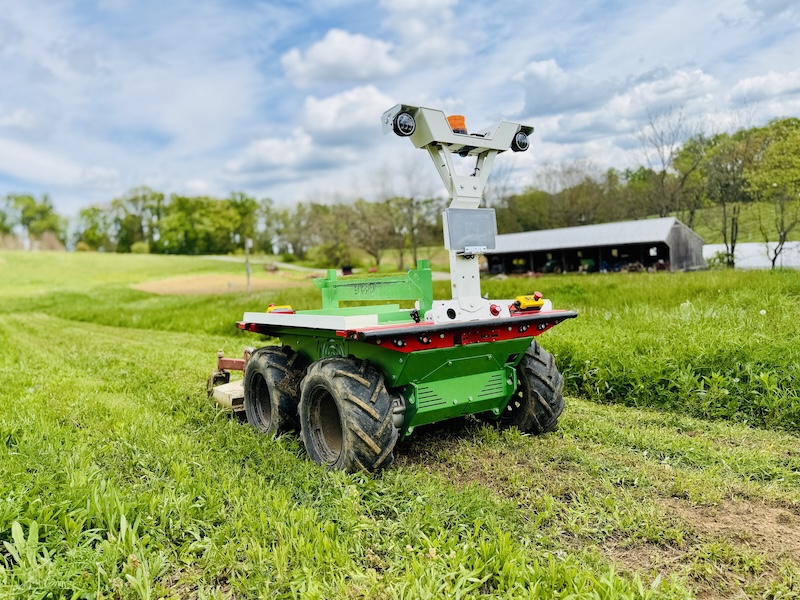
That query is the place autonomous cell robotics is heading subsequent, and the businesses that reply it’s going to outline what the class appears like for the subsequent decade. Those that can’t will stay helpful contained in the 4 partitions they had been constructed for and irrelevant in all places else.
The infrastructure assumption no one talks about
Indoor autonomous cell robotic (AMR) deployment rests on a foundational assumption that’s so embedded it hardly ever will get named: the setting will be configured to help the robotic.
You’ll be able to lay QR codes on the ground. You’ll be able to designate lanes. You’ll be able to set up Wi-Fi entry factors at each nook. You’ll be able to flatten the floor, management the lighting, prohibit the site visitors patterns, and usually engineer the bodily world to cut back the uncertainty the robotic has to handle.
Take that assumption away and a unique set of engineering issues emerge. Issues that can not be solved by upgrading the mannequin or including compute. They require a essentially completely different strategy to how the system was designed within the first place.
Outside environments do not need fastened lanes. They’ve terrain that adjustments with rainfall, with season, with the actual determination a website supervisor made final Tuesday about the place to park the trailer.
They don’t have managed lighting. They’ve the solar on the horizon at 5am in late autumn, which is roughly the worst doable lighting situation for any imaginative and prescient system attempting to function reliably.
They don’t have dependable GPS. They’ve buildings, canopies, and overhead protection that scatter or block satellite tv for pc indicators at precisely the moments when correct localisation issues most.
What out of doors environments do have is variability, at a scale and tempo that no prior mapping train can absolutely account for and no simulation can faithfully reproduce.
What occurs when the robotic leaves the constructing
We’ve got been working autonomous out of doors robots commercially since 2018, throughout greater than 800 deployments in 15 nations spanning vineyards, nurseries, berry operations, and more and more industrial out of doors environments.
That have has produced a working understanding of what the transition from indoor to out of doors autonomy truly requires, versus what it’s generally assumed to require.
The frequent assumption is that it’s primarily a sensing drawback. Get higher cameras, extra succesful lidar, higher-resolution notion, and the out of doors setting turns into tractable. There may be fact on this. Notion functionality issues.
However notion shouldn’t be the binding constraint in most real-world out of doors deployments. The binding constraint is the system’s skill to take care of dependable operation throughout the complete vary of circumstances it encounters over an prolonged industrial deployment, together with circumstances that no one anticipated when the system was designed and that can not be addressed by a software program replace alone.
Contemplate what occurs when an autonomous car transitions between out of doors and indoor environments repeatedly inside a single working cycle, as our platform does when shifting between open yard areas and coated storage amenities.
GPS sign, which was offering acceptable localisation open air, degrades on the boundary of the construction and disappears fully inside. The visible setting adjustments from an open house with ample options to a doubtlessly uniform inside with restricted landmark availability.
The robotic should handle this transition seamlessly, and not using a pause, and not using a reset, and with out shedding monitor of the place it’s at a decision adequate to navigate safely in an area the place being off by just a few centimetres means clipping infrastructure.
That transition drawback shouldn’t be solvable by enhancing any single element of the system. It requires architectural selections about how localisation sources are fused, when to belief which supply, the right way to detect degradation earlier than it turns into a failure, and the right way to behave conservatively when uncertainty is excessive with out merely stopping and ready for circumstances to enhance.
These selections can solely be made properly by a crew that has watched the system navigate that transition 1000’s of instances in actual operational circumstances.
The collaboration crucial
There’s a associated shift taking place alongside the technical one, and it issues at the very least as a lot for the subsequent era of autonomous cell platforms.
Robots working inside devoted work cells will be designed for isolation. The cell is fenced, the human stays exterior, and the robotic optimises fully for job efficiency inside that boundary. Robots working in shared out of doors environments can’t be designed this manner.
They share house with individuals who have their very own jobs to do, who aren’t educated robotic operators, who will step in entrance of the machine with out warning to select one thing up, and who will type an opinion about whether or not they belief the system based mostly on what it does in these moments.
That opinion issues greater than most robotics engineers wish to acknowledge. A robotic that employees don’t belief will probably be reported as failing consistently, even when it’s performing accurately, as a result of each surprising behaviour turns into an incident.
A robotic that employees belief will probably be given extra latitude, reported extra precisely, and built-in extra successfully into the workflow. The trail to industrial scale in out of doors robotics runs instantly by way of the workforce’s willingness to work alongside the machine, and that willingness is earned by way of behavioural predictability quite than technical functionality.
This isn’t a smooth consideration. It’s a design requirement that shapes particular engineering selections: how the robotic indicators its intent when approaching an individual, the way it manages velocity in proximity to employees, the way it behaves when its path is blocked by an individual who has not seen it but.
The AMRs that reach open out of doors environments would be the ones that had been designed for human coexistence from the start, not those that had human security retrofitted onto a platform optimised for velocity.
What Kirkland is aware of
One of many extra instructive knowledge factors in our expertise has been the expansion of our relationship with Kirkland, one of many UK’s main agricultural gear distributors. Kirkland was not in search of a robotic that might work solely in managed circumstances.
Their clients, industrial growers working within the variable out of doors environments of British agriculture, wanted one thing that might deal with actual British circumstances: moist winters, variable floor, blended operations, and a workforce that was already stretched skinny.
The platform wanted to earn its place with out demanding that the shopper change how they work to accommodate it.
What that relationship has demonstrated, in apply, is that the subsequent wave of AMR adoption in markets just like the UK is not going to come from environments being engineered to simply accept robots. It can come from robots able to working within the environments that exist already.
The agricultural and lightweight industrial out of doors sector in Britain is giant, labour-constrained, and working in precisely the sorts of unstructured environments that almost all AMR platforms can not deal with. The chance is there exactly as a result of it has been left unaddressed by platforms that can’t depart the engineered setting behind.
The Grande 44 and what it represents
Our newest platform, the Grande 44, shouldn’t be a product announcement dressed up as a pattern piece. But it surely does illustrate one thing directionally vital.
At 6,000 kilos of towing capability and 44 horsepower, it represents a transfer from the lighter transport functions that proved the class towards heavier-duty autonomous materials motion in out of doors and semi-outdoor industrial settings.
The roles it’s designed for, shifting important hundreds by way of unstructured out of doors environments with out GPS and with out fastened infrastructure, are jobs that till not too long ago required an individual and a car.
The sign shouldn’t be the precise specification. It’s the course of journey. The autonomous cell platform that may deal with heavier responsibility work open air, within the environments that had been by no means engineered for machines, is shifting towards a a lot bigger portion of the out of doors labour market than lighter platforms might attain.
The place this goes
The AMR class has spent its first decade proving that robots can work reliably in structured environments. The subsequent decade will decide which platforms can function reliably in unstructured ones.
That’s not an incremental enchancment on what exists. It’s a completely different product, designed from completely different assumptions, validated towards completely different failure modes, and constructed for a world that was not organized to obtain it. The businesses that navigate that transition efficiently is not going to be those with probably the most succesful demonstrations.
They would be the ones which have logged probably the most hours within the locations that demonstrations by no means attain, which have absorbed the failure modes that solely seem after prolonged real-world operation, and which have constructed the human belief that makes scale doable in environments the place the robotic and the workforce share the identical floor.
The indoor AMR is a rare achievement. It’s also, within the context of what the world truly wants from autonomous cell robotics, a starting.

In regards to the writer: Charlie Andersen is CEO of Burro, a robotics firm growing autonomous cell robots for agriculture and different out of doors working environments. Andersen grew up on a working farm and has a longstanding curiosity in utilizing machines and automation to cut back repetitive guide work. He leads Burro’s growth of vision-based autonomous robots designed to work alongside individuals in unstructured environments.