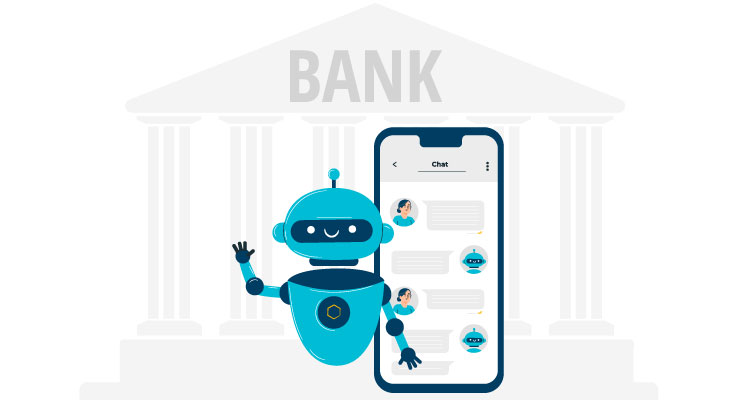
Introduction: Finance Enters the AI Era
How AI Is Transforming the Financial Services Industry reflects one of the most significant shifts in modern finance. As transaction volumes surge, customer expectations rise, and regulatory pressure intensifies, artificial intelligence has moved from experimentation to mission-critical deployment.
Banks, insurers, and investment firms are embedding AI across core functions—turning data into real-time insights and automation into competitive advantage.
Why Financial Services Are Ideal for AI Adoption
Financial services generate vast amounts of structured and unstructured data—from transactions and market feeds to documents and customer interactions. This data-rich environment makes finance uniquely suited for AI.
Key drivers include:
- Need for real-time decision-making
- High cost of manual operations and compliance
- Growing fraud and cyber threats
- Demand for personalized, digital-first services
AI addresses all these challenges at scale.
Core AI Technologies Used in Finance
Machine Learning and Predictive Analytics
Machine learning models analyze historical and real-time data to predict outcomes such as credit risk, fraud likelihood, and market movements. These models continuously improve as new data arrives, making them more accurate than static rule-based systems.
Natural Language Processing and Generative AI
Natural language processing (NLP) enables AI to read contracts, analyze reports, generate summaries, and interact with customers conversationally. Generative AI further supports content creation, reporting, and internal knowledge management.
AI in Banking Operations and Automation
Banks use AI to automate routine processes such as account opening, KYC checks, reconciliations, and transaction monitoring. This reduces processing time, lowers costs, and minimizes human error—allowing staff to focus on higher-value work.
Fraud Detection and Financial Crime Prevention
AI has become a frontline defense against fraud. By analyzing transaction patterns in real time, AI systems detect anomalies and suspicious behavior instantly—often stopping fraud before losses occur.
This is especially critical for digital payments, card transactions, and real-time transfer systems.
AI in Credit Scoring and Lending
Traditional credit models rely on limited data and rigid rules. AI-driven credit scoring evaluates a broader range of signals—cash flow patterns, transaction behavior, and alternative data—improving accuracy and expanding access to credit.
This benefits both lenders and underserved borrowers.
Personalized Customer Experience and Support
AI-powered chatbots, virtual assistants, and recommendation engines personalize financial services by:
- Answering customer queries 24/7
- Recommending relevant products
- Providing proactive alerts and insights
Customer platforms increasingly integrate AI to deliver faster, more consistent service.
AI in Investment Management and Trading
Investment firms use AI for:
- Portfolio optimization
- Algorithmic trading
- Market sentiment analysis
- Risk-adjusted return forecasting
Global institutions such as JPMorgan Chase and Goldman Sachs have invested heavily in AI-driven analytics and trading infrastructure.
Risk Management and Stress Testing
AI enhances enterprise risk management by continuously monitoring market, credit, and operational risks. Scenario modeling and stress testing become faster and more granular—helping institutions prepare for volatility and shocks.
Regulatory Compliance and Reporting (RegTech)
Compliance is one of the most expensive areas in finance. AI-powered RegTech automates:
- Transaction monitoring
- Regulatory reporting
- Audit trails and documentation
- Policy compliance checks
Regulators such as the Securities and Exchange Commission and the Reserve Bank of India increasingly encourage advanced analytics to strengthen oversight and resilience.
AI in Insurance: Underwriting and Claims
Insurers use AI to assess risk more accurately, price policies dynamically, and process claims faster. Image analysis, predictive models, and automation reduce fraud and improve customer satisfaction.
Benefits for Financial Institutions and Customers
AI delivers measurable value:
- Lower operational costs
- Faster processing and decisions
- Reduced fraud losses
- Improved customer experience
- Greater financial inclusion
Customers benefit from speed, personalization, and transparency.
Challenges, Ethics, and Governance
Despite its benefits, AI in finance raises concerns:
- Model bias and fairness
- Explainability of decisions
- Data privacy and cybersecurity
- Regulatory and accountability issues
Strong governance, transparency, and human oversight are essential for responsible adoption.
The Future of AI in Financial Services
The future points toward AI-native finance:
- AI copilots for bankers, analysts, and advisors
- Real-time, predictive financial management
- Autonomous compliance and risk monitoring
- Deeper integration across global financial ecosystems
Finance will become more proactive, personalized, and resilient.
FAQs
Q1: Is AI replacing jobs in financial services?
AI automates tasks but also creates higher-value roles focused on analysis and strategy.
Q2: Is AI safe to use in finance?
When governed properly, AI improves accuracy and security.
Q3: Does AI improve financial inclusion?
Yes, especially through alternative credit scoring and digital services.
Q4: Are small financial firms using AI?
Cloud-based tools make AI accessible to smaller institutions.
Q5: Can AI decisions be explained to regulators?
Explainable AI is a growing focus in regulated finance.
Q6: Will AI become mandatory in finance?
AI is quickly becoming a baseline capability for competitive firms.
Conclusion
How AI Is Transforming the Financial Services Industry shows that artificial intelligence is no longer optional—it is foundational. By automating operations, strengthening risk management, enhancing customer experience, and enabling smarter decisions, AI is redefining how financial services operate. Institutions that adopt AI responsibly will lead the next era of digital finance.