
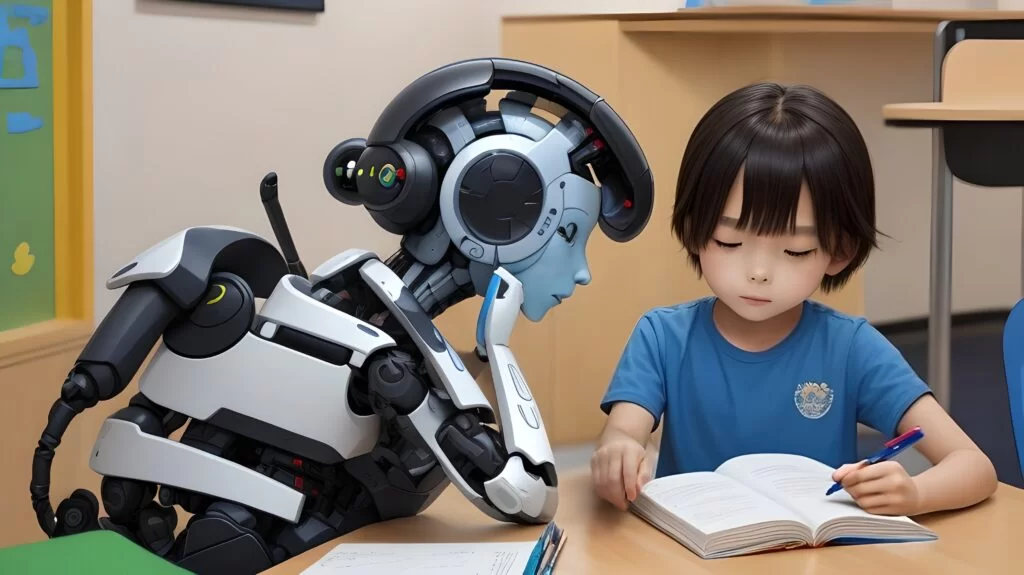
Introduction: Why AI Tutors Are Gaining Momentum
Rise of AI Tutors: Personalized Learning for Students Explained captures a major shift in global education. Traditional classrooms often struggle to meet individual learning needs, especially with large class sizes and varied student abilities. AI tutors address this challenge by offering one-on-one, adaptive support—anytime and anywhere.
Educational platforms such as Khan Academy and Coursera are already integrating AI tutors to personalize learning for millions of students worldwide.
What Are AI Tutors and How Do They Work?
AI tutors are intelligent software systems designed to guide students through lessons, practice exercises, and assessments. They analyze how a student learns, track performance over time, and adjust explanations, pacing, and difficulty levels automatically.
Unlike static e-learning tools, AI tutors interact dynamically—answering questions, offering hints, and revisiting concepts until understanding is achieved.
Why Personalized Learning Matters More Than Ever
Students learn at different speeds and in different ways. One-size-fits-all instruction can leave some learners behind while failing to challenge others. Personalized learning ensures:
- Better engagement and motivation
- Faster mastery of concepts
- Reduced learning gaps
- Higher confidence and retention
AI tutors make personalization scalable—something traditional education systems struggle to achieve alone.
Core Technologies Behind AI Tutors
Machine Learning and Adaptive Algorithms
Machine learning allows AI tutors to learn from student interactions. Over time, the system identifies strengths, weaknesses, and preferred learning styles—refining instruction continuously.
Natural Language Processing and Conversational AI
Natural language processing (NLP) enables AI tutors to understand student questions and respond conversationally. This makes learning feel interactive and approachable, especially for complex subjects.
How AI Tutors Personalize Learning
Adaptive Learning Paths
AI tutors create customized learning journeys. If a student struggles with a topic, the tutor revisits prerequisites. If the student excels, it introduces advanced material—maintaining the right level of challenge.
Real-Time Feedback and Assessment
Instead of waiting for tests, students receive instant feedback on mistakes and progress. Immediate correction improves understanding and builds confidence.
Benefits of AI Tutors for Students
Students using AI tutors experience:
- One-on-one attention without pressure
- Learning at their own pace
- Multiple explanations for the same concept
- Continuous support beyond classroom hours
These benefits are especially valuable for exam preparation, skill development, and self-paced learning.
How Teachers and Institutions Use AI Tutors
AI tutors do not replace teachers—they support them. Educators use AI insights to:
- Identify struggling students early
- Customize classroom instruction
- Reduce repetitive teaching tasks
- Focus on mentoring and critical thinking
Institutions benefit from scalable learning support without proportional increases in staffing.
AI Tutors in Schools, Colleges, and Online Platforms
AI tutors are now used across:
- K–12 education for foundational skills
- Colleges and universities for STEM and language learning
- Online platforms for self-paced courses
- Corporate training and upskilling programs
Blended learning models combine AI tutors with human instruction for optimal results.
Bridging Learning Gaps and Improving Access
One of the strongest advantages of AI tutors is accessibility. Students in remote or underserved regions gain access to high-quality, personalized learning support—helping reduce educational inequality worldwide.
Challenges, Ethics, and Data Privacy
Despite their promise, AI tutors raise important concerns:
- Student data privacy and security
- Bias in algorithms and content
- Over-reliance on automated instruction
Responsible deployment requires transparency, strong governance, and human oversight.
The Future of AI Tutors in Education
Looking ahead, AI tutors will become:
- More multilingual and culturally adaptive
- Integrated with curricula and assessments
- Personalized across subjects and careers
- Central to lifelong learning
Education will shift from standardized instruction to continuous, individualized growth.
FAQs
Q1: Do AI tutors replace teachers?
No. They support teachers by providing personalized instruction at scale.
Q2: Are AI tutors effective for all subjects?
They are especially effective in math, science, languages, and test prep.
Q3: Can AI tutors help struggling students?
Yes. Adaptive learning identifies and addresses gaps early.
Q4: Is student data safe with AI tutors?
Data safety depends on strong privacy policies and compliance standards.
Q5: Are AI tutors affordable?
Many platforms offer low-cost or free options, increasing accessibility.
Q6: Will AI tutors become common in schools?
Yes. Adoption is expected to grow rapidly worldwide.
Conclusion
Rise of AI Tutors: Personalized Learning for Students Explained highlights how artificial intelligence is redefining education. By delivering adaptive, one-on-one support at scale, AI tutors improve outcomes, expand access, and empower both students and educators. When used responsibly, AI tutors strengthen—not replace—the human foundations of learning.


