
Introduction: From Chalkboards to AI Classrooms
AI in Education: How Teachers Are Using AI Tools in Classrooms reflects a quiet but powerful transformation happening inside schools worldwide. Artificial intelligence is no longer limited to education technology companies—it is now actively used by teachers to enhance instruction, manage workloads, and better support students.
Rather than replacing educators, AI is becoming a teaching assistant—working alongside teachers to make classrooms more personalized, inclusive, and effective.
Why Teachers Are Adopting AI Tools
Teachers face increasing demands:
- Large class sizes with diverse learning needs
- Limited time for personalized attention
- Heavy administrative and grading workloads
- Pressure to integrate digital skills into curricula
AI tools help teachers address these challenges by automating routine tasks and providing data-driven insights that improve instruction.
Core AI Technologies Used by Teachers
Adaptive Learning and Machine Learning
Machine learning allows educational platforms to analyze student performance in real time. Lessons adapt automatically based on progress, ensuring students receive content at the right level and pace.
Natural Language Processing and AI Assistants
Natural language processing (NLP) enables AI assistants to understand student questions and generate clear explanations. These tools act as on-demand helpers—especially useful outside classroom hours.
Educational platforms such as Khan Academy and Coursera already use AI to personalize lessons and support teachers globally.
AI for Personalized Learning in Classrooms
Differentiated Instruction at Scale
AI helps teachers deliver differentiated instruction—something traditionally difficult with large classes. Students receive customized practice, resources, and explanations aligned with their individual needs.
Supporting Struggling and Advanced Students
AI identifies learning gaps early, allowing teachers to intervene before students fall behind. At the same time, advanced learners receive enrichment content that keeps them engaged and challenged.
AI Tools That Help Teachers Save Time
One of AI’s biggest classroom benefits is time savings. Teachers use AI to:
- Automate grading of quizzes and assignments
- Summarize student performance data
- Generate progress reports
- Draft emails and classroom communications
This frees up hours each week for teaching, mentoring, and creativity.
AI in Lesson Planning and Content Creation
AI tools assist teachers by:
- Generating lesson plans aligned with standards
- Creating quizzes, worksheets, and activities
- Adapting materials for different reading levels
- Suggesting multimedia resources
Instead of starting from scratch, teachers refine and personalize AI-generated content.
AI-Powered Assessment and Feedback
AI enables faster, more consistent feedback by:
- Providing instant feedback on assignments
- Highlighting common mistakes across the class
- Tracking skill mastery over time
Students benefit from immediate guidance, while teachers gain clearer insights into learning trends.
AI Tutors and Classroom Support Systems
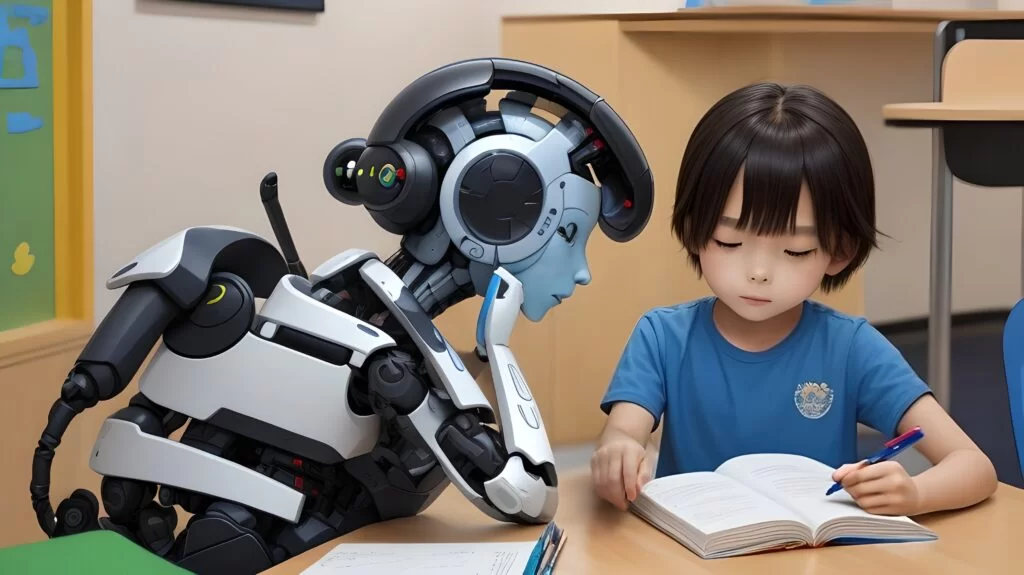
AI tutors act as virtual teaching assistants—answering student questions, explaining concepts in multiple ways, and providing extra practice. These systems are especially valuable in blended and flipped classrooms.
Teachers remain central, using AI tutors to extend learning beyond school hours.
AI in Classroom Management and Engagement
AI helps improve engagement by:
- Monitoring participation in digital activities
- Identifying disengaged or struggling students
- Recommending interventions or support strategies
This allows teachers to respond proactively rather than reactively.
Preparing Students for an AI-Driven World
By using AI tools in class, teachers also model responsible AI use. Students learn:
- How AI supports problem-solving
- The importance of critical thinking and verification
- Ethical considerations of AI technology
This prepares learners for future careers where AI literacy is essential.
Ethical, Privacy, and Practical Concerns
Despite its benefits, AI in classrooms raises concerns:
- Student data privacy and security
- Algorithmic bias in assessments
- Over-reliance on automated tools
Responsible use requires transparency, clear policies, parental consent, and strong human oversight.
The Future Role of Teachers in AI-Enhanced Education
As AI becomes more common, teachers’ roles evolve—not disappear. Educators increasingly act as:
- Learning designers
- Mentors and coaches
- Critical thinking guides
- Ethical role models
AI handles routine tasks; teachers focus on human connection and deeper learning.
FAQs
Q1: Are AI tools replacing teachers?
No. AI supports teachers by enhancing efficiency and personalization.
Q2: Can AI help students with different learning needs?
Yes. AI adapts instruction for both struggling and advanced learners.
Q3: Is AI safe for use in classrooms?
When used responsibly with proper data protection, yes.
Q4: Do teachers need technical skills to use AI tools?
Most tools are user-friendly and require minimal technical knowledge.
Q5: Is AI affordable for schools?
Cloud-based tools make AI increasingly accessible and cost-effective.
Q6: Will AI become standard in classrooms?
Yes. AI is expected to become as common as digital learning platforms.
Conclusion
AI in Education: How Teachers Are Using AI Tools in Classrooms shows that artificial intelligence is reshaping teaching in practical, teacher-led ways. By personalizing learning, reducing administrative burdens, and enhancing student engagement, AI empowers teachers to do what they do best—educate, inspire, and guide students.
The future classroom is not teacher versus AI—it is teacher with AI.