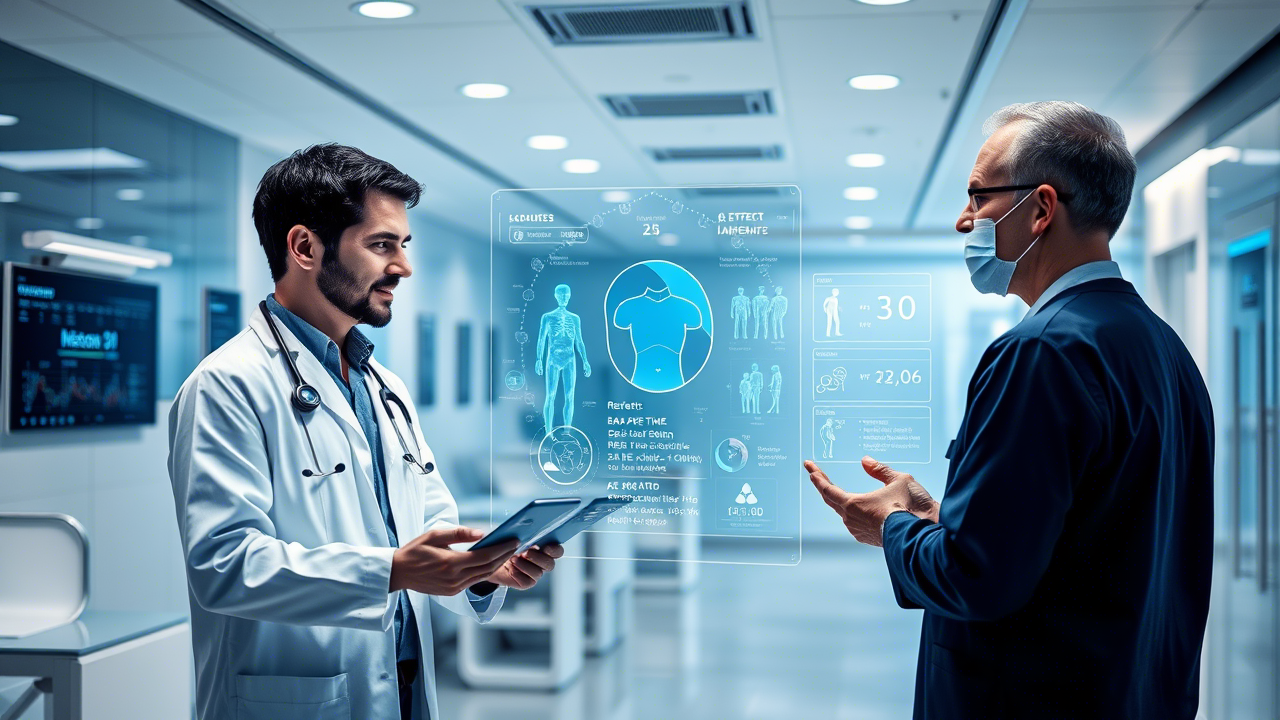
Introduction: AI Reshapes Modern Healthcare
How AI Is Improving Medical Diagnostics and Patient Outcomes reflects one of the most profound transformations in modern medicine. As healthcare systems face rising patient loads, clinician shortages, and complex diseases, artificial intelligence is emerging as a powerful ally—helping doctors detect conditions earlier, diagnose more accurately, and deliver better outcomes.
Technology leaders and healthcare innovators, including World Health Organization, Google Health, and Mayo Clinic, are actively integrating AI into clinical practice to enhance care delivery at scale.
Why Traditional Medical Diagnostics Face Limitations
Conventional diagnostics rely heavily on manual interpretation, clinical experience, and time-intensive testing. These methods face challenges such as:
- Human fatigue and variability
- Growing volumes of medical data
- Delays in diagnosis due to workload
- Limited access to specialists in many regions
AI addresses these gaps by processing vast datasets rapidly and consistently—supporting clinicians with data-driven insights.
Core AI Technologies Powering Medical Diagnostics
Machine Learning and Deep Learning
Machine learning models analyze patient records, lab results, and historical outcomes to identify patterns linked to disease. Deep learning, a subset of ML, excels at recognizing complex relationships in high-dimensional medical data—often matching or exceeding human-level accuracy in specific diagnostic tasks.
Medical Imaging and Computer Vision
Computer vision enables AI to interpret medical images such as X-rays, MRIs, CT scans, and pathology slides. These systems detect subtle abnormalities that may be missed in early stages—supporting faster and more reliable diagnoses.
AI in Early Disease Detection
Cancer Diagnosis and Screening
AI plays a critical role in detecting cancers such as breast, lung, prostate, and skin cancer. Algorithms analyze imaging and biopsy data to identify early signs—often before symptoms appear—significantly improving survival rates.
Cardiovascular and Neurological Disorders
AI helps identify heart disease, strokes, and neurological conditions by analyzing ECGs, imaging scans, and patient histories. Early detection enables timely intervention, reducing long-term complications.
AI-Powered Clinical Decision Support
AI-driven clinical decision support systems assist physicians by:
- Suggesting possible diagnoses
- Highlighting risk factors
- Recommending evidence-based treatments
- Flagging potential drug interactions
These systems reduce diagnostic errors and support consistent, high-quality care—especially in high-pressure clinical environments.
Improving Diagnostic Accuracy and Speed
By automating routine analysis and prioritizing high-risk cases, AI significantly shortens diagnostic timelines. Faster diagnoses lead to:
- Earlier treatment initiation
- Reduced hospital stays
- Better patient outcomes
AI acts as a second set of eyes—enhancing, not replacing, clinical judgment.
AI in Personalized and Precision Medicine
AI enables personalized care by analyzing genetic data, lifestyle factors, and treatment responses. This supports:
- Customized treatment plans
- Optimized drug selection and dosing
- Better prediction of treatment outcomes
Precision medicine shifts healthcare from reactive treatment to proactive, individualized care.
Impact on Patient Outcomes and Quality of Care
The use of AI in diagnostics leads to:
- Earlier and more accurate diagnoses
- Reduced misdiagnosis rates
- Improved survival and recovery outcomes
- More equitable access to quality care
Patients benefit from faster answers, targeted treatments, and improved confidence in care decisions.
Role of AI in Hospitals and Clinical Workflows
Hospitals use AI to streamline workflows by:
- Prioritizing urgent cases
- Automating documentation and reporting
- Optimizing imaging and lab operations
- Supporting remote diagnostics and telemedicine
This reduces clinician burnout and allows healthcare professionals to focus more on patient care.
Ethical, Regulatory, and Safety Considerations
Despite its promise, AI in healthcare must address:
- Data privacy and security
- Bias in training datasets
- Explainability of AI decisions
- Regulatory compliance and accountability
Healthcare regulators and institutions emphasize that AI should augment clinicians—not operate autonomously without oversight.
The Future of AI in Healthcare Diagnostics
Looking ahead, AI will become deeply embedded across healthcare systems. Future advancements include:
- Real-time AI diagnostics at the point of care
- AI-powered wearable health monitoring
- Predictive population health analytics
- Greater integration with electronic health records
AI will help shift healthcare from treatment-focused to prevention-focused models.
FAQs
Q1: Does AI replace doctors in diagnostics?
No. AI supports clinicians by improving accuracy and efficiency.
Q2: Is AI diagnosis reliable?
When properly trained and validated, AI can match or exceed human accuracy in specific tasks.
Q3: Can AI help in rural or underserved areas?
Yes. AI enables remote diagnostics and specialist-level support.
Q4: Is patient data safe with AI systems?
Strict data governance and privacy regulations are essential and widely enforced.
Q5: What medical fields benefit most from AI diagnostics?
Radiology, pathology, oncology, cardiology, and neurology lead adoption.
Q6: Will AI diagnostics become standard practice?
Yes. AI is expected to become a core component of modern healthcare.
Conclusion
How AI Is Improving Medical Diagnostics and Patient Outcomes demonstrates how artificial intelligence is transforming healthcare from the inside out. By enabling earlier detection, improving diagnostic accuracy, and supporting personalized treatment, AI is saving lives and improving quality of care. As adoption grows responsibly, AI will play a central role in building faster, fairer, and more effective healthcare systems worldwide.